Preserving Pride, Across Languages
From Wikidata to Abstract Wikipedia: A New Way to Think About Knowledge

Every June, Pride Month reminds us of the importance of visibility, representation, and memory.
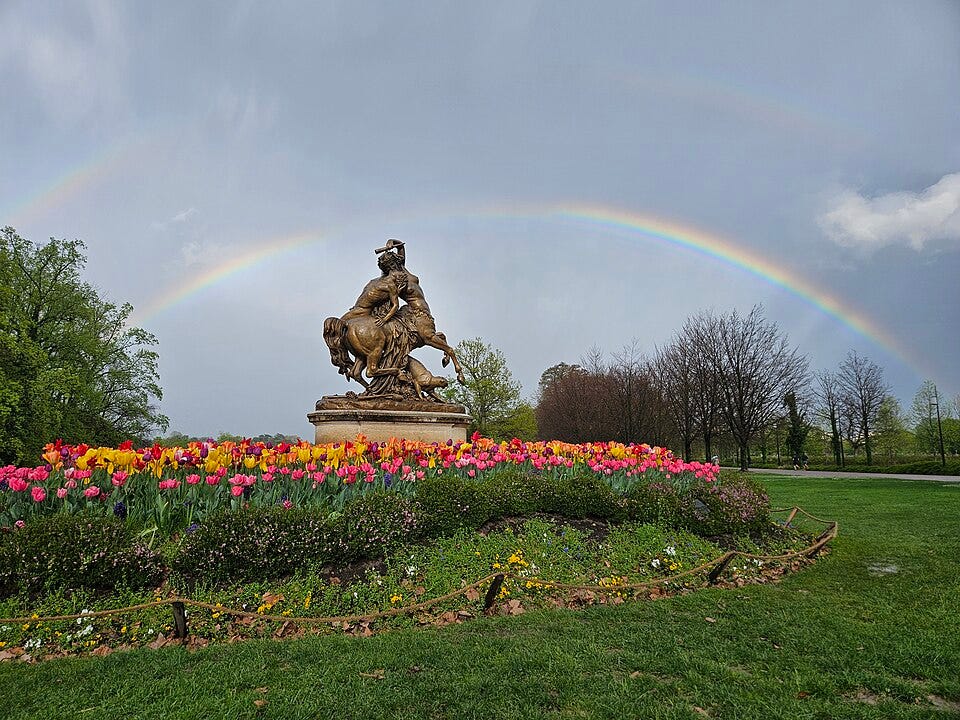
Over the years, I have contributed to documenting LGBTQIA+ history through Wikimedia projects. Some contributions focus on people, some on organizations, some on archives, and others on Pride marches. Yet one challenge appears again and again: language.
Knowledge exists in many languages, but it is not distributed equally. An article may exist in one language and be missing in another. An infobox may contain rich information in one community while remaining incomplete elsewhere. Historical archives may be well documented locally but remain invisible to people who do not speak the language.
This Pride Month, I am focusing on Abstract Wikipedia.
Why multilinguality matters
The Wikimedia movement supports hundreds of languages. This diversity is one of its greatest strengths, but it is also one of its greatest challenges.
Many LGBTQIA+ stories are deeply local. Pride marches, community centers, activist groups, archives, and cultural events are often documented by people who know their own communities. Their knowledge may never reach readers in other languages. For example, this year marks 30 years of the Pride Marches in Lyon. While helping prepare an exhibition dedicated to this history, I was reminded of how much LGBTQIA+ memory remains scattered, fragile, and often inaccessible beyond local communities.
Abstract Wikipedia proposes a different approach. Instead of writing knowledge separately in every language, it aims to represent knowledge in a language-independent form and then render it into many languages through Wikifunctions.
The vision is ambitious: create knowledge once and make it accessible everywhere.
From data to knowledge
For many years, Wikidata has demonstrated the power of structured knowledge.
A Pride parade can have:
a location,
a start date,
an organizing body,
a number of participants,
related events,
official websites,
photographs,
historical editions.
These facts can already be stored in Wikidata.
Abstract Wikipedia extends this idea further. Structured information can become structured narratives. Information stored once could potentially be transformed into readable content in many languages.
For communities with limited resources, this could help make knowledge more widely available.
Wikidata provides the structured knowledge: facts about people, organizations, archives, Pride marches, and countless other topics. Wikifunctions provides the logic needed to transform and present that information. Abstract Wikipedia builds on both ideas, with the goal of generating readable content in multiple languages from a common representation. While the vision is still evolving, it opens up exciting possibilities for sharing knowledge across linguistic boundaries without having to recreate everything language by language.
Thinking about infoboxes
One area that particularly interests me is infoboxes.
Infoboxes are often the first thing readers see. They summarize key information and help people quickly understand a subject.
Recently, I have been experimenting with multilingual infoboxes for topics such as:
The goal is simple.
If structured information already exists, why should every language community have to rebuild the same infobox from scratch?
A shared representation could allow communities to focus on improving knowledge rather than repeatedly recreating the same structures.
My experiments explore how Wikifunctions can contribute to this vision and how reusable components might support future multilingual knowledge systems.
Pride beyond language barriers
Pride is often associated with visibility.
For me, visibility is also about knowledge.
Can someone discover the history of a local Pride march even if they do not speak the local language?
Can a small LGBTQIA+ archive become visible to readers across the world?
Can structured knowledge help bridge linguistic gaps while still respecting local perspectives and identities?
These questions do not have simple answers.
Research on multilingual Wikipedia has shown that different language communities develop their own perspectives, priorities, and cultural contexts. Knowledge is not merely translated; it is shaped by communities.
Abstract Wikipedia will not replace those communities. Instead, it offers an opportunity to share certain forms of knowledge more broadly while preserving linguistic diversity.
A few weeks ago, I gave a Wikicafé talk titled “From Wikidata to Abstract Wikipedia: Promises and Illusions of Structured Knowledge.” Many of the questions I discussed there are the same ones that motivate my work during Pride Month: How do we document local histories? How do we share them across languages? And how can we make knowledge about LGBTQIA+ communities more accessible to people around the world?
These questions do not have simple answers, but they are one reason why I am excited to explore the possibilities offered by Abstract Wikipedia.
Looking ahead
Abstract Wikipedia remains a work in progress. The project combines Wikidata, Wikifunctions, and language-independent content to explore new ways of creating multilingual knowledge.
For me, Pride Month is a good moment to think about what this could mean for LGBTQIA+ documentation.
Archives, Pride marches, community organizations, and local histories deserve to be discoverable beyond the boundaries of a single language.
Knowledge should travel.
Not by replacing languages.
But by connecting them.
This Pride Month, that is why I am focusing on Abstract Wikipedia.